
Gums may bleed while brushing if they are irritated or inflamed. This can happen if you brush too aggressively, use a hard-bristled toothbrush, or if plaque has built up near the gum line. Bleeding gums are also a common early sign of gingivitis (gum disease). Switching to a soft toothbrush or electric toothbrush and brushing gently can help, but persistent bleeding should be checked by a dentist.
You should visit a dentist if your gums bleed for more than a week, or if you also have symptoms like swelling, redness, tenderness, bad breath, or gum recession. Bleeding gums can sometimes signal gum disease, which needs professional treatment such as a deep cleaning (scaling and root planing). Early treatment helps prevent the condition from worsening and protects your teeth and gums.
If your gums are bleeding, visit our Las Vegas dentist office to have your teeth examined. At Care For You Dental we can examine you and determine whether they are bleeding due to simple irritation or if there is a greater health concern. You can schedule an appointment with our office by calling (702) 765-4018. In the meantime, here is what you need to know about your gums.

At Care For You Dental, we encourage you to keep an eye on your gum health and call us if any of these signs persist for longer than a week –
If you notice any of these symptoms, the best thing to do is call a Las Vegas dentist for an official diagnosis. Self-treating can lead to additional problems because you may not be addressing the actual cause of the problem. You can schedule an appointment with our office by calling 702-765-4018.
There are several ways to prevent gum disease and the symptoms that arise from it. If you have already experienced symptoms of bleeding or swollen gums, following these steps will still help you. However, it is wise to visit our office for an examination so that we can make customized treatment recommendations. In the meantime, you can manage your symptoms by doing the following –
When you brush your teeth, the bristles will often go immediately over or next to your gums. Gum tissue is sensitive and if you are using a hard toothbrush or brushing too aggressively you can scratch and irritate them. Our suggestion is to switch to an electric or battery operated toothbrush because you can get an excellent clean without having to apply a lot of pressure. This should provide your gums with needed relief.
Very often, this is because you have not flossed in a long time. If it has been awhile, your gums may be sensitive, irritated or even bleed when you begin your flossing routine. This is perfectly acceptable. Once you begin flossing daily, your gums should no longer bleed. In the process you will be removing the plaque from in between your gums and your teeth, helping them to be in better health. At Care For You Dental we can show you how to floss your teeth properly to help ensure that you are getting a really good clean. Call (702) 765-4018 and let us know if your gums continue to bleed after a week of flossing daily.
If your gums have started to swell, there are two main causes for it. The first is that you have irritated your gums or accidentally scratched them by eating something that is particularly sharp or abrasive. The second, and most likely, is that you are suffering from an early stage of gum disease. Gingivitis typically makes your gums swell, become red and irritated. This is a warning sign that should lead you to schedule an appointment with our dental office. If you notice this early warning sign and seek treatment, a dental cleaning may be all that is necessary to treat the condition so that your gums can return to good health. Otherwise, the symptoms could become progressively worse.
You could have gum disease. Even in the early stages, this condition can make your gums sensitive and irritated. Otherwise, you could have eaten something acidic or abrasive that is making them temporarily sensitive but this should pass within a day or so.
Calculus, also known as tartar, refers to the hardened dental plaque that forms on teeth due to a lack of proper oral hygiene.
Gingival flap surgery is a procedure in which the periodontist separates the gums from the teeth temporarily to reach the root of the tooth and nearby bone.
A necrotizing periodontal disease is a disease that involves the necrosis of gingival tissues and lesions forming in the mouth.
A periapical abscess is an abscess that forms from inflammation containing pus in the tissue surrounding the tooth.
A periodontal ligament is a tissue that connects the tooth to the bone and is destroyed by advanced periodontal disease.
Periodontitis is a lethal gum infection that results from poor oral hygiene, damaging soft tissue and destroying the bones that support the teeth.
The periodontium is the tissue that surrounds and supports the teeth, gums, periodontal ligament and bone.
Root scaling and planing is a non-surgical procedure that involves removing plaque and calculus from the pockets around the root before smoothing the surfaces of the root to help everything heal.
Call Us
Directions
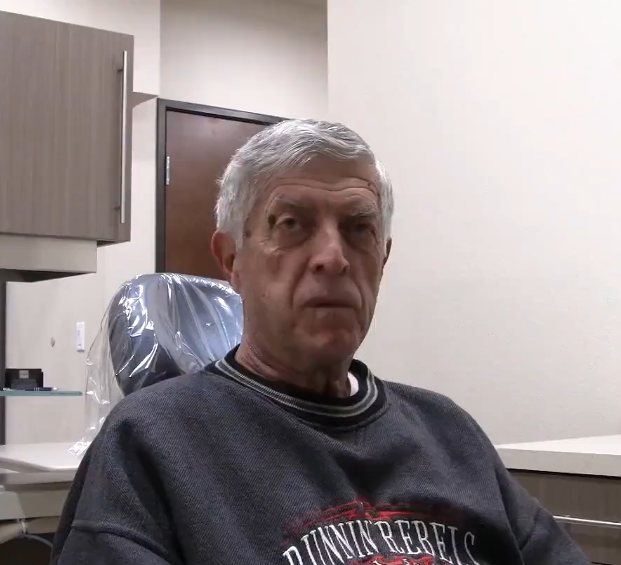
Watch Real Patient Testimonials and Discover How We Help Families Smile With Confidence Every Day.

4.9/5 (100+ Reviews)



We provide a wide range of dental services, including routine checkups and cleanings, emergency dental care, tooth extractions, root canal treatment, cosmetic dentistry (crowns, veneers, bonding), and dental implants.
If you are experiencing severe tooth pain, swelling, bleeding, or a broken/chipped tooth, contact us immediately. We offer emergency dental care and will try to schedule you as soon as possible.
Yes. We treat patients of all ages, including children. We also help patients with dental anxiety by providing a calm environment and discussing comfort options, including sedation when appropriate.