
No, you should not feel pain during the extraction. Before the procedure begins, we thoroughly numb the area to ensure your comfort. You may feel pressure as the tooth is removed, but discomfort is minimized. After the procedure, any soreness can usually be managed with over-the-counter pain medication and proper aftercare.
Recovery time varies depending on how the extraction was performed and the condition of the tooth. Most patients experience reduced swelling and discomfort within a few days. Following post-operative instructions—such as resting, avoiding straws, using ice packs, and eating soft foods—can help speed up healing and reduce the risk of complications.
American Dental Association (ADA). Glossary of Dental Terms. 2015
While our focus at Care For You Dental is on preventative care, we perform tooth extractions on a regular basis. We are always looking for ways to avoid an extraction by keeping your oral health in good shape. We will clean your teeth on a regular basis, discuss a healthy diet with you, and treat gum disease, cavities, and infections to the best of our abilities; in order to keep your teeth healthy and intact. As a general dentist, we will also work to restore your tooth if it has been damaged – all of which can help you to maintain your natural teeth for years to come. If you are experiencing discomfort or your tooth is in need of repair, we invite you to call our dental office at (702) 765-4018 to schedule an appointment. During your examination, we will let you know if your tooth can be saved or if a tooth extraction is the best option for preventing the spread of infection and eliminating your discomfort. In our dentist office, we will take the steps necessary to ensure your comfort so that regardless of which treatment option you select, you will feel relaxed during the process.
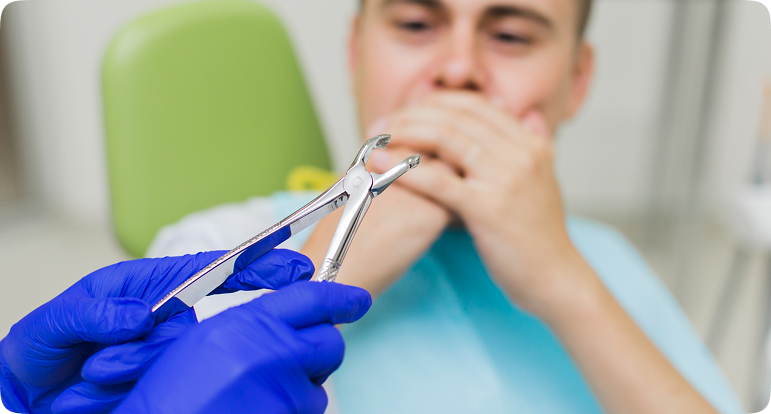
If you do need to have a tooth extraction, there are several ways that we can go about the procedure. First, we will numb the area of your mouth so that you do not feel any direct discomfort. You will feel pressure during the procedure but otherwise remain relaxed and comfortable. If your tooth has matured and broken through the gums, we can use dental tools to wiggle the tooth and pull it out of the socket. Afterward, the area will be thoroughly cleaned, and gauze will be used to stop the bleeding while you recover. If the tooth is particularly stubborn and not budging, we might need to create a flap and break it into several pieces and remove it that way. Once the tooth has been removed from the socket, the area will be thoroughly cleaned before the flap is placed back down and sutured in place. Gauze is then used to stop the bleeding.
At Care For You Dental, we perform a tooth extraction in the least invasive manner possible to shorten the recovery time. Most of our patients will recover in the office for around an hour while we make sure that the bleeding has sufficiently slowed down, and any anesthesia is wearing off. We typically recommend having someone pick you up after having a tooth extraction. At home, you will want to rest and taking a nap is highly recommended. Be sure to drink plenty of water but avoid drinking anything that is too hot or too cold as this could lead to sensitivity for the first couple of days. We also recommend avoiding the use of a straw, for the first few days, as the suction could cause the affected area to start bleeding. How the procedure was completed will influence how long it takes to recover but, in general, the swelling will go down after a few days. In our family dentist office, we recommend taking ibuprofen to help reduce the swelling and to use an ice pack or cold compress for 15 minutes at a time. During your recovery, you should eat foods that are high in nutrition but soft. Drinking a smoothie with vegetables, fruit, yogurt, and protein powder is an excellent way to keep your nutrition levels up without needing to bite down on anything. As you add foods back in, be sure to start with things that are soft like noodles and gradually work your way up to a full diet. While caring for your mouth after a tooth extraction, you also need to keep your mouth as clean as possible. Brush your surrounding teeth like normal while carefully avoiding the surgical site. You can also rinse with water and baking soda or an antibacterial mouthwash to reduce the risk of an infection developing. We may want to see you for a follow-up appointment, as well.
At Care For You Dental, we practice preventative care and can help in an emergency situation. If you feel intense discomfort in your tooth or your jaw, give us a call since this could be a sign of a dental abscess or severe infection. Simultaneously, if it hurts when you bite down or chew this can also be an indication of a cavity or infection. Other signs like puss or bleeding indicate that you should call 702-765-4018 and schedule an appointment with our family dentistry office right away.
If you still have your wisdom teeth, you may need to have them removed. We invite you to schedule an appointment with our dentist office so that we can examine your teeth and take X-rays to determine whether or not you should keep your wisdom teeth. Not everyone needs to have them out, so it depends on how much room you have and whether they are growing in straight or impacted. Also, if you have worn braces, they might need to be removed to prevent them pushing the other teeth forward. The process of removing wisdom teeth is roughly the same as any other tooth with the exception of when and why we perform the procedure. At Care For You Dental, we typically recommend wisdom teeth removal in the teenage years. General extractions are more common as people age and have a tooth that needs to be removed due to a severe infection or significant damage. To find out whether or not you should keep your wisdom teeth, call (702) 765-4018 to schedule an appointment to speak with Lubna Anwar
A dental abscess is a pocket of pus the forms in the tooth root from a bacterial infection.
Tooth decay occurs when the enamel begins to break down, causing erosion due to plaque and tartar buildup on the teeth.
Dental caries, also known as cavities, result from poor oral hygiene that allows plaque to build up and form tiny holes in the teeth.
A dental checkup is an appointment that includes cleaning the teeth, checking for any signs of infection, and treating any issues found. It is typically recommended at least once every six months.
A dental filling restores the structure of a tooth by using metal, alloy, porcelain, or plastic to fill the damaged area.
Dental sealants are made of a resin material that we apply to the chewing surfaces of the back teeth to help prevent dental caries.
A dentist, also known as a dental surgeon, is a doctor who specializes in the diagnosis, prevention, and treatment of diseases and conditions of the oral cavity.
Gingivitis is inflammation of the gum tissue that results from plaque buildup, infections in the mouth, and poor oral hygiene.
Preventive dentistry focuses on maintaining oral health to help prevent plaque buildup, tartar formation, and infections in the mouth.
Tartar forms when plaque builds up on the surface of the teeth and hardens (calcifies) into a deposit that is much more difficult to remove and typically requires professional treatment.
Tooth enamel is the protective, visible outer layer of a tooth that covers and protects the dentin and dental pulp.
Call Us
Directions
Watch Real Patient Testimonials and Discover How We Help Families Smile With Confidence Every Day.

4.9/5 (100+ Reviews)



We provide a wide range of dental services, including routine checkups and cleanings, emergency dental care, tooth extractions, root canal treatment, cosmetic dentistry (crowns, veneers, bonding), and dental implants.
If you are experiencing severe tooth pain, swelling, bleeding, or a broken/chipped tooth, contact us immediately. We offer emergency dental care and will try to schedule you as soon as possible.
Yes. We treat patients of all ages, including children. We also help patients with dental anxiety by providing a calm environment and discussing comfort options, including sedation when appropriate.